AIRPORTS
Understanding the world’s airport system
WAIS provides a structured framework for examining airports as components of regional, national and global aviation systems.
WORLD AIRPORT SYSTEM
WAIS examines airports as elements of an interconnected global system. The World Airport System provides a common geographic and analytical framework for comparing airports across regions, countries and multi-airport systems.
951
AIRPORTS
11
WORLD REGIONS
76
MULTI-AIRPORT SYSTEMS
FUNCTIONAL CLASSIFICATION
Airports differ not only in size, but also in the functions they perform within aviation networks. WAIS Airport Functional Classification provides a systematic framework for identifying these roles and comparing airports across different geographic and market contexts.
WAIS 001
Airport Functional Classification: Concepts, Systems and Methodology
REGIONAL STRUCTURE
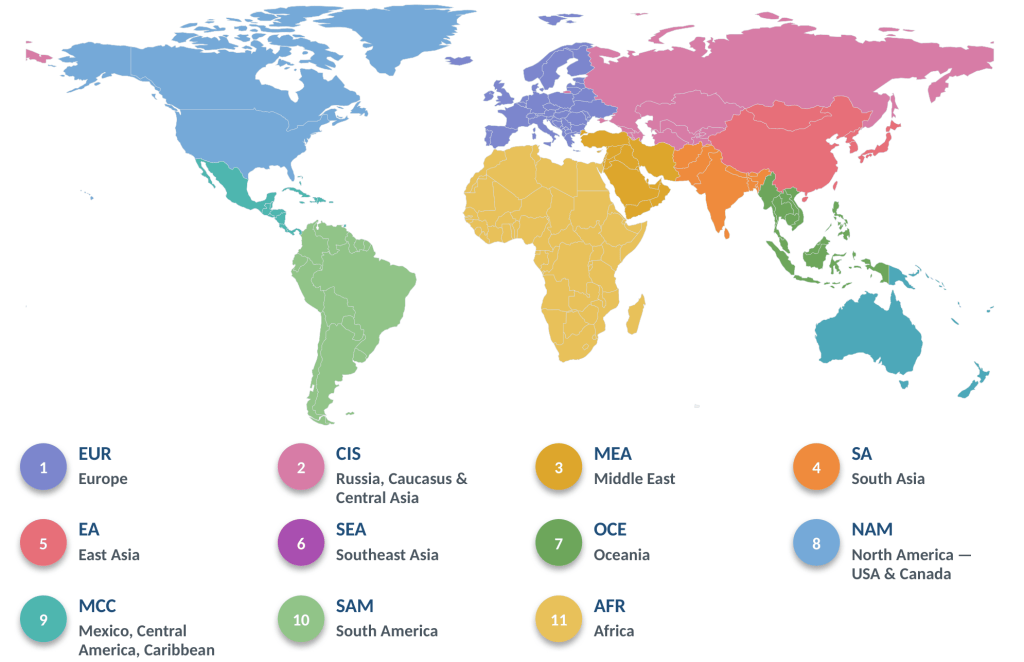
WAIS organizes the world airport system into eleven geographic regions, providing a consistent framework for regional comparison while preserving important differences in aviation geography, market structure and airport development.
MULTI-AIRPORT SYSTEMS
Many metropolitan areas are served by more than one airport. WAIS identifies Multi-Airport Systems (MAS) to represent these airports as parts of a shared metropolitan aviation system while preserving each airport as an individual record.
76
MULTI-AIRPORT SYSEMS
Within each system, WAIS distinguishes the role of individual airports as Primary Metropolitan Gateways (PMG), Alternative Metropolitan Gateways (AMG) or airports with a Mixed System Role (MSR).
RELATED PUBLICATIONS
WAIS 001
AIRPORT FUNCTIONAL CLASSIFICATION
A systematic framework for classifying airports by their functional roles, network position and place within regional, national and global aviation systems.
WAIS 003
WORLD AIRPORTS RANKING 2025
A global reference and ranking covering nearly 1,000 of the world’s major airports and 76 multi-airport systems, based on full-year 2025 passenger traffic data.

